Login

Over the past decade, global broadband development has continued to be shaped by fibre expansion, while Fixed Wireless Access (FWA) has also been gaining scale as part of the fixed broadband market.
According to the Ericsson Mobility Report, the aggregated FWA connection is expected to grow from 185 million at the end of 2025 to 350 million by the end of 2031, with 90 percent of the connections being on 5G. Considering a global average household size of about four people, this equates to approximately 1.4 billion individuals being served by FWA broadband by the end of 2031.
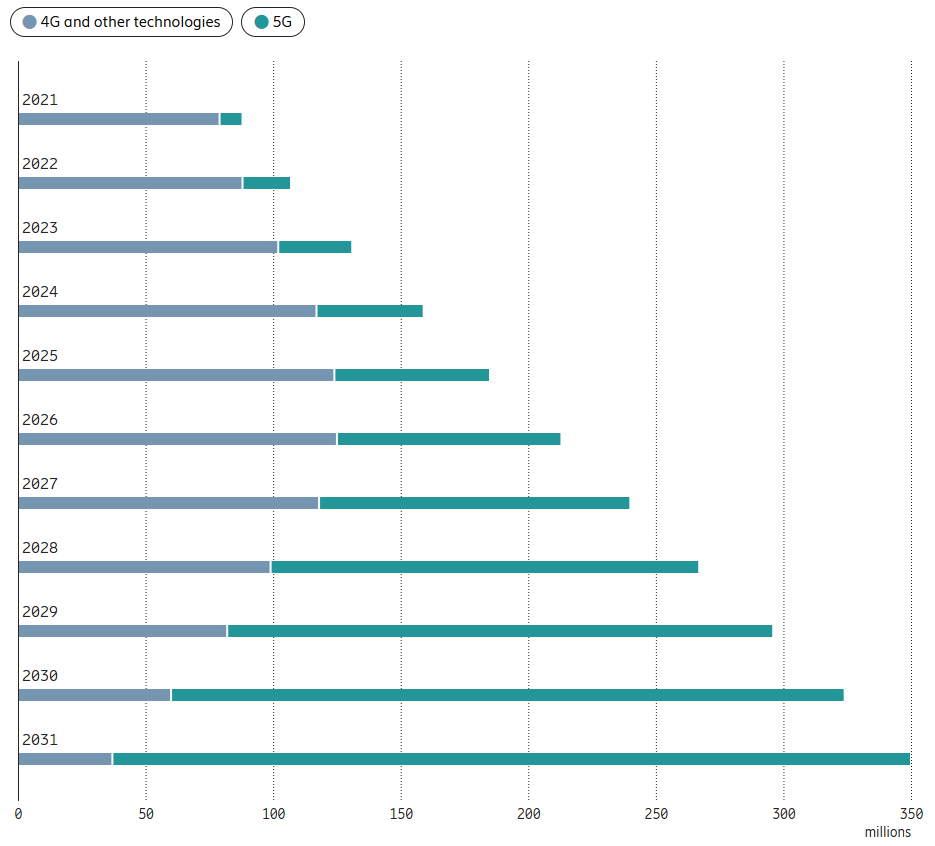
This suggests that operators may need to plan for a broadband environment where fibre and wireless access continue to coexist across different markets and deployment conditions.
The continued growth of FWA does not necessarily imply a simple replacement relationship with fibre. Fibre remains central to long-term fixed broadband infrastructure, while FWA is often adopted where deployment speed, coverage flexibility, or construction economics become key considerations.
Industry research from GSMA Intelligence indicates that fibre continues to consolidate its role in fixed broadband, while market competition and service adoption are increasingly shaped by commercial strategies and deployment conditions.
From this perspective, the key issue is not whether one access technology replaces another, but how operators manage different access options under varying commercial and deployment constraints.
FWA is often associated with areas where fibre deployment is limited or still in progress. However, recent market forecasts indicate that its role is expanding beyond a temporary coverage solution.
Omdia’s report finds 5G FWA will surpass 4G FWA by 2027 and is on track to overtake DSL as the world’s third-largest broadband technology. With cable modem subscriptions expected to decline, FWA is positioned to become the second most common broadband access technology post-2030.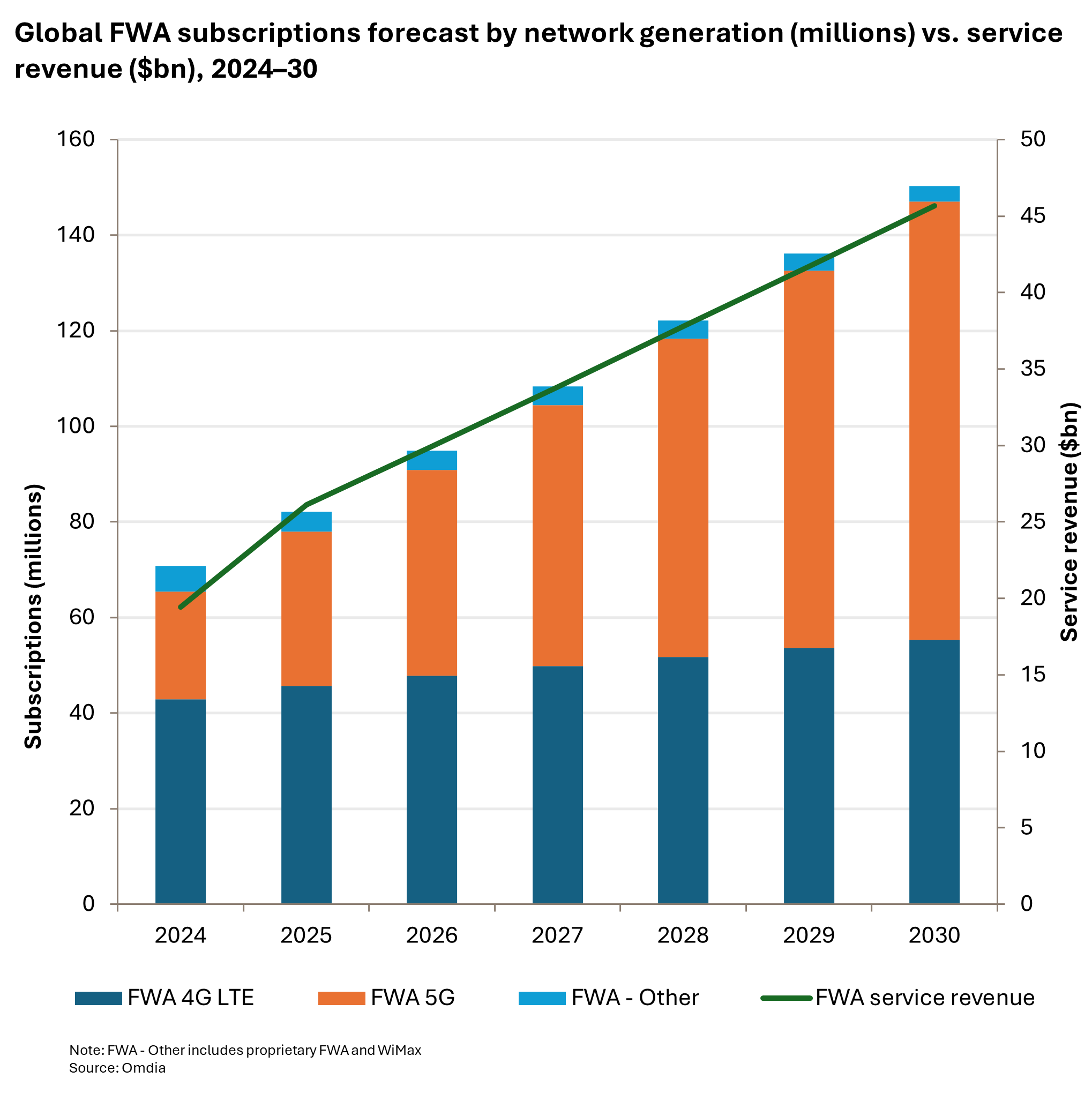
As a result, operators are not only deploying FWA as a pre-fibre solution, but increasingly incorporating it alongside fibre within broader access strategies to address different deployment timelines, service requirements, and market conditions.
This implies that, in some scenarios, multiple access technologies need to be supported within the same operational framework.
When multiple access technologies are supported within the same operational framework, the impact extends beyond the network layer.
In traditional deployment models, different access technologies are typically associated with different CPE types. As a result, when a user transitions between access modes—for example, from FWA to fibre—operators may need to manage equipment replacement, reconfiguration, logistics, and on-site service.
This creates operational dependencies between access technology and CPE lifecycle management, which can increase service complexity and lifecycle cost over time.
This raises a broader question: how should CPE design evolve in order to better support multi-access environments?
At the core of this challenge is the coupling between access technology and CPE lifecycle.
Historically, each access type—DSL, cable, fibre, or wireless—has been tied to a dedicated device. This model works efficiently in single-access environments, but becomes increasingly rigid as multiple access technologies coexist.
In multi-access scenarios, any change in access type often triggers a corresponding change in customer equipment. Over time, this can lead to higher replacement frequency, fragmented device portfolios, and increased operational overhead.
One possible direction that has emerged in industry discussions is to decouple access technology from the CPE lifecycle—allowing a single device platform to support multiple access paths where needed.
From a cost perspective, such an approach may increase unit device complexity. However, it may also reduce lifecycle costs by lowering replacement frequency, simplifying inventory structures, and improving operational continuity across different access scenarios.
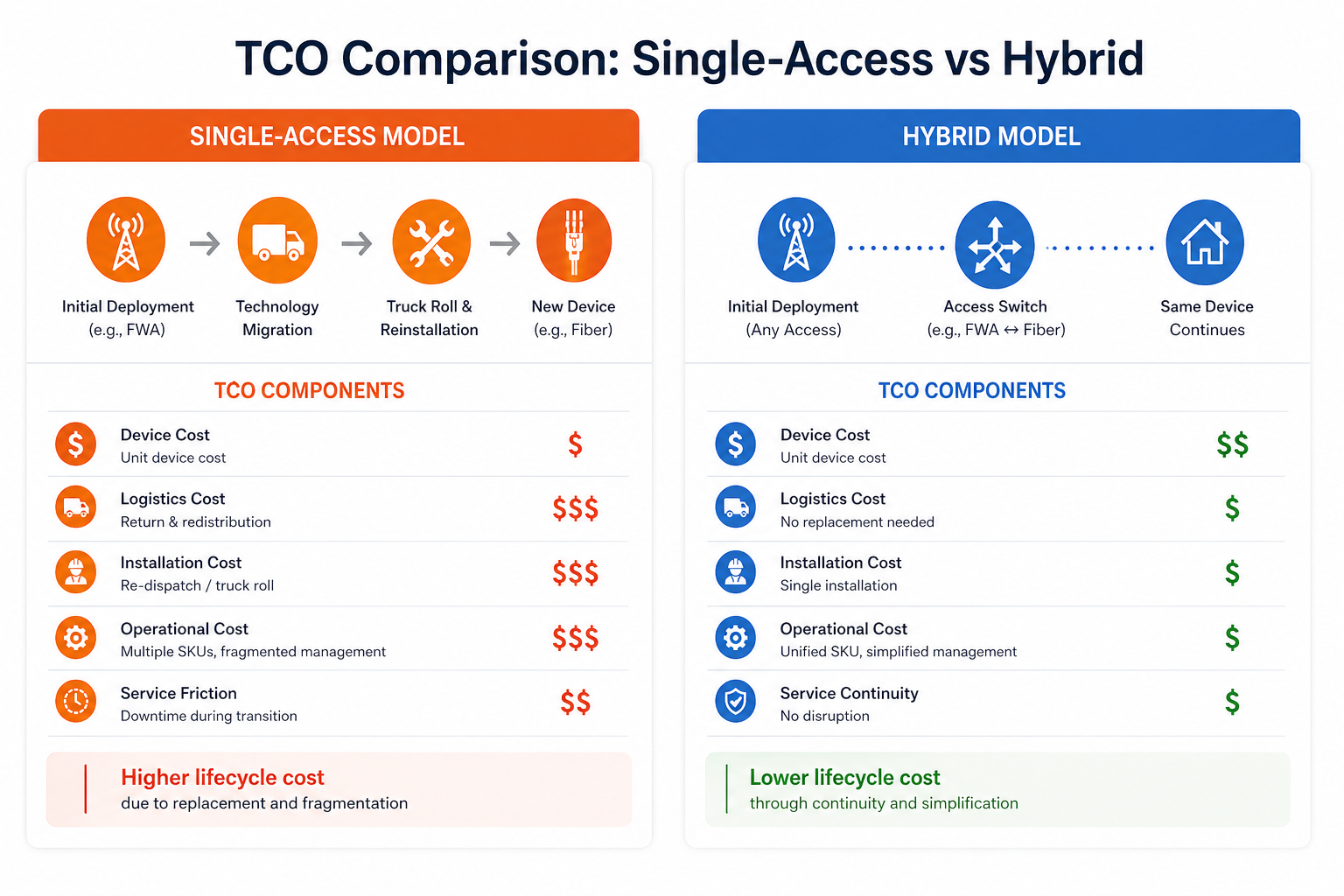
The extent to which this approach is applicable depends on operator strategy, deployment environment, and service model—but it provides a useful lens for evaluating how CPE design might evolve in multi-access networks.
Hybrid CPE designs can be seen as one implementation of this broader concept.
By integrating multiple access technologies within a single device, hybrid CPE allows operators to manage fibre and wireless connectivity within a unified framework, rather than treating them as separate deployment tracks.
In practical terms, this type of architecture enables several operational advantages. It can support initial service delivery over wireless access while fibre rollout is still in progress, and later transition to fibre without requiring full device replacement. It can also provide service continuity in scenarios where one access type is temporarily unavailable, reducing disruption at the user level.
In addition, a unified device platform may help operators simplify SKU management and streamline installation and maintenance processes, particularly in markets where multiple access technologies are deployed in parallel.
From an implementation perspective, solutions such as Comnect’s GP924PVNR, a GPON + 5G NR hybrid CPE, reflect this design approach. By combining fibre access, wireless connectivity, and in-home networking within a single platform, it is designed to support more flexible service provisioning and smoother access transitions in multi-access environments.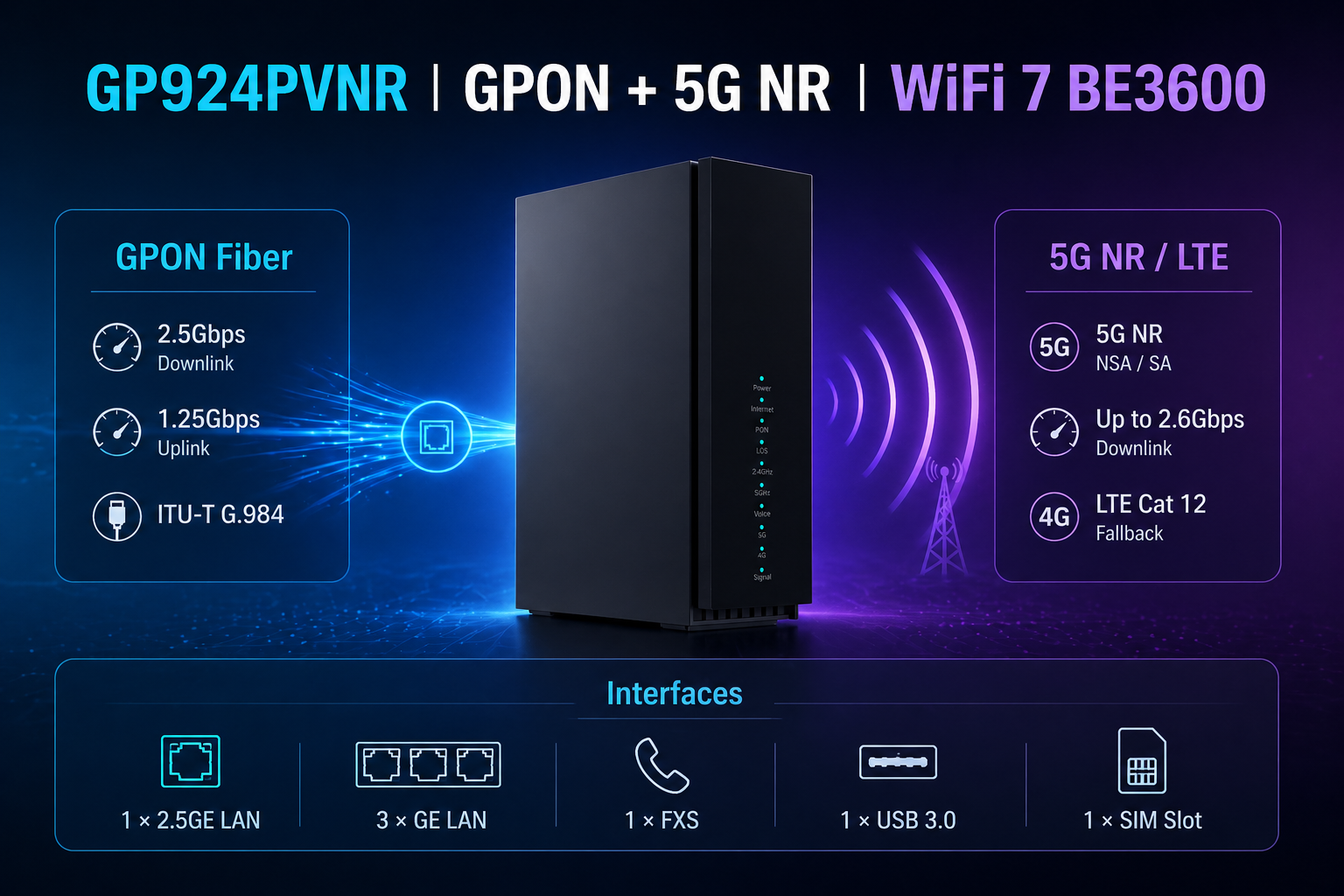
While the specific benefits depend on deployment strategy and market conditions, hybrid CPE provides a practical reference point for how operators can align access flexibility with operational efficiency.
Broadband networks are entering a phase where multiple access technologies coexist structurally.
In this context, the role of CPE is gradually shifting—from a device tied to a specific access type to a platform capable of supporting multiple connectivity options.
Understanding this transition is important for interpreting how broadband services will be delivered in increasingly heterogeneous network environments.